OBSERVER INTERVIEW
I was recently interviewed by James Rozmus for The Observer.
https://observer.co.uk/culture/in-real-life/article/the-art-of-subvertising
Read more: OBSERVER INTERVIEWArticle:
Darren Cullen compares his working space to motorway expansion: “One more lane, just one more lane will fix it. I’m like: one more desk, one more shelf.” In the artist’s south London studio every flat surface is covered by dioramas and designs; shelves are stacked floor to ceiling. A toy Terminator robot in an artist’s smock glowers down at me across a Subbuteo football pitch on which inch-tall players dribble around bomb craters.
It is one of Cullen’s creations that led me here. Some of London Underground’s more observant commuters may have recently noticed a new advertising campaign purporting to be for ChatGPT. Written in a simple white font on a black background, the ad reads: “Yes, we built a machine that tells teenagers to kill themselves. But – it might also help them with their homework.”
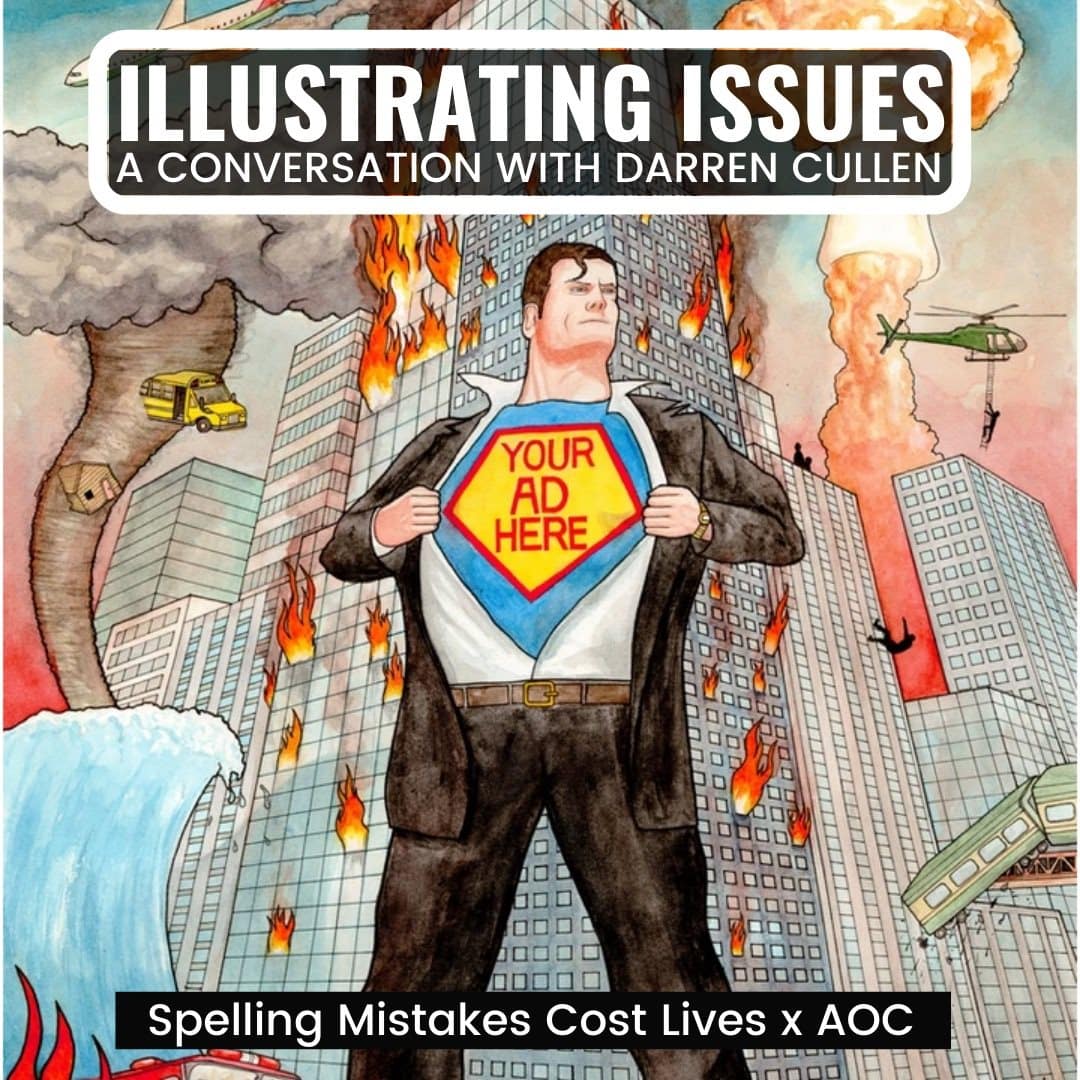
This protest with a punchline – known as “subvertising” – is what Cullen, AKA Spelling Mistakes Cost Lives, has been honing since he dropped out of an advertising degree just over 20 years ago, horrified at the psychological manipulation he and his fellow students were being taught.
“These are the most sophisticated propaganda techniques that have ever been devised,” he says, talking quickly, using his hands. “So, as much as I hate advertising, I never blame people for falling for it. Of course you fall for it – everyone falls for it.”
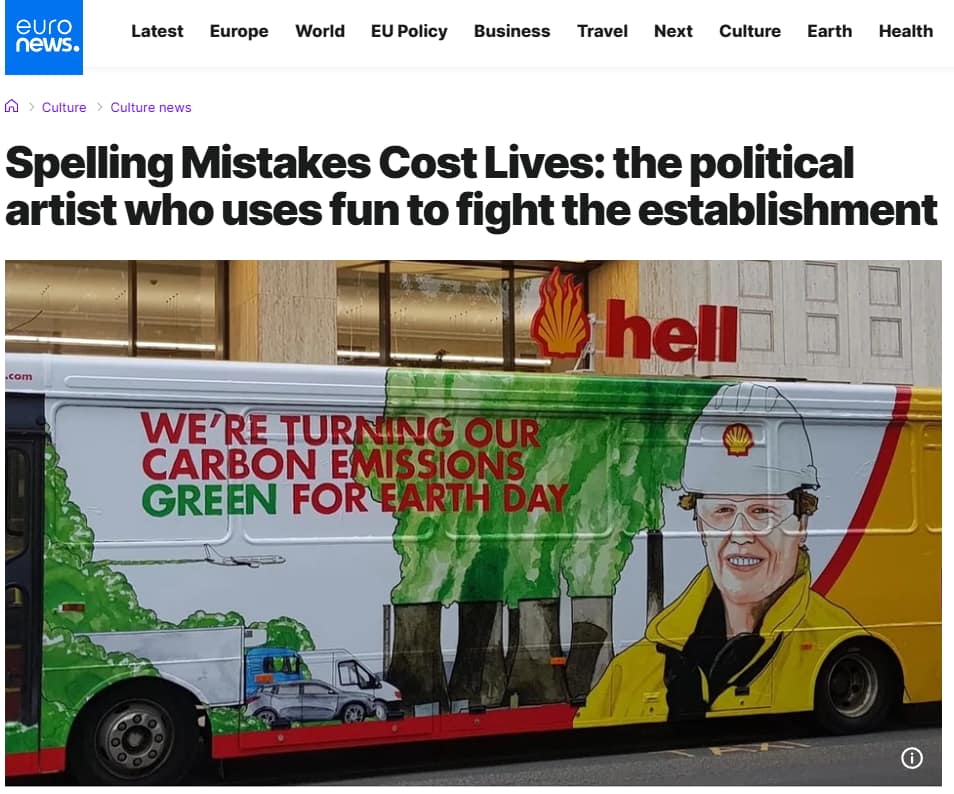
Enrolling at Glasgow School of Art, he decided to take what he’d learned and turn it on its head. His fake ads have targeted everything from big oil and the Middle East conflict, to AI, the climate crisis and Elon Musk.
There have also been installations, such as his Pocket Money Loans kiosk, which charged children 5,000% interest and featured in Banksy’s Dismaland dystopian theme park in 2015. It was this piece, Cullen says, that changed his life, boosting his profile and enabling him to afford his own studio. He shifts enough creative merch now that he needs two assistants to help manage it.
“A lot of my ideas come from taking something to its logical conclusion,” he says. “The advertising media is so absurd that it feels like the setup is already there and you just need to write the punchline.”
On the desk next to us sits an Action Man toy, a prop left over from the Battlefield Casualties advert he filmed with comedian Matt Berry in aid of Veterans for Peace (its toy range included PTSD Action Man, Paralysed Action Man and Dead Action Man).
Cullen is under no illusion that satire alone is going to change things. “It’s not going to save the world … I always think of my work as being in support of actual activism.”
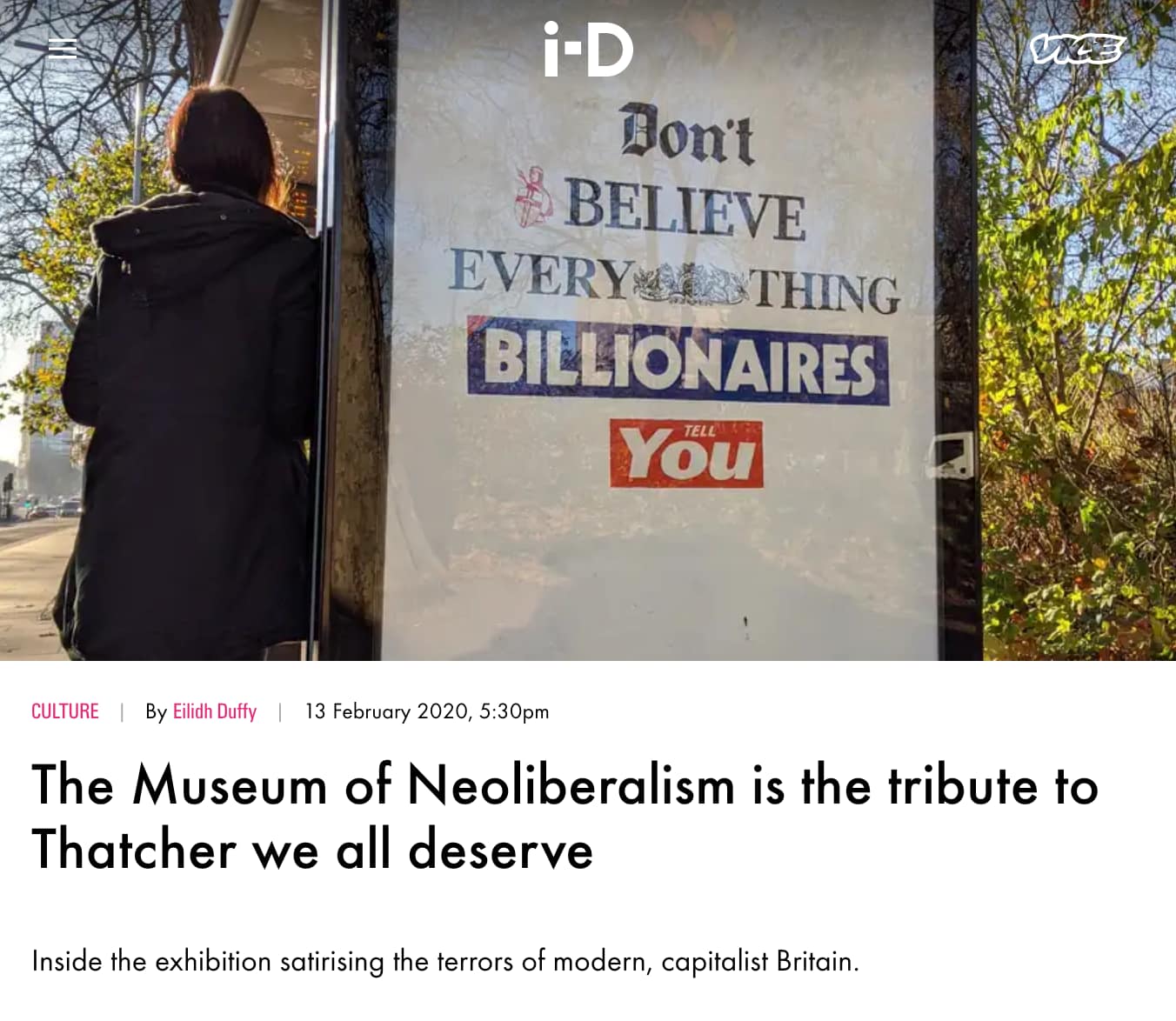
In 2019, he opened the Museum of Neoliberalism, with art historian Gavin Grindon, in Leegate shopping centre, south London. Its displays included a recreated cross-section of wall from Grenfell Tower – combustible cladding on one side of the concrete, a child’s bedroom wallpaper on the other – and an Amazon “fulfilment” centre, complete with a genuine bottle of urine from a worker prevented from taking a toilet break.
“There are certain things you can satirise by exaggerating, and then there are certain things you just need to point to them,” Cullen says. The museum was forced to close in 2024 after the land was sold to a developer of luxury flats. A new home for it is near to being finalised.
I ask if the reopened museum will still feature the sample from the unfortunate Amazon worker. Cullen retrieves a cardboard box, inside of which is a plastic bottle containing a cloudy brown liquid.
“It looks very unhealthy now,” he concedes. “Over time, I’ve had to equalise the pressure. I don’t know what the process is going on inside, but it was crunching the bottle.” He retains some pride in the fact that: “As far as I know, it’s the first bottle of piss in a museum collection.”